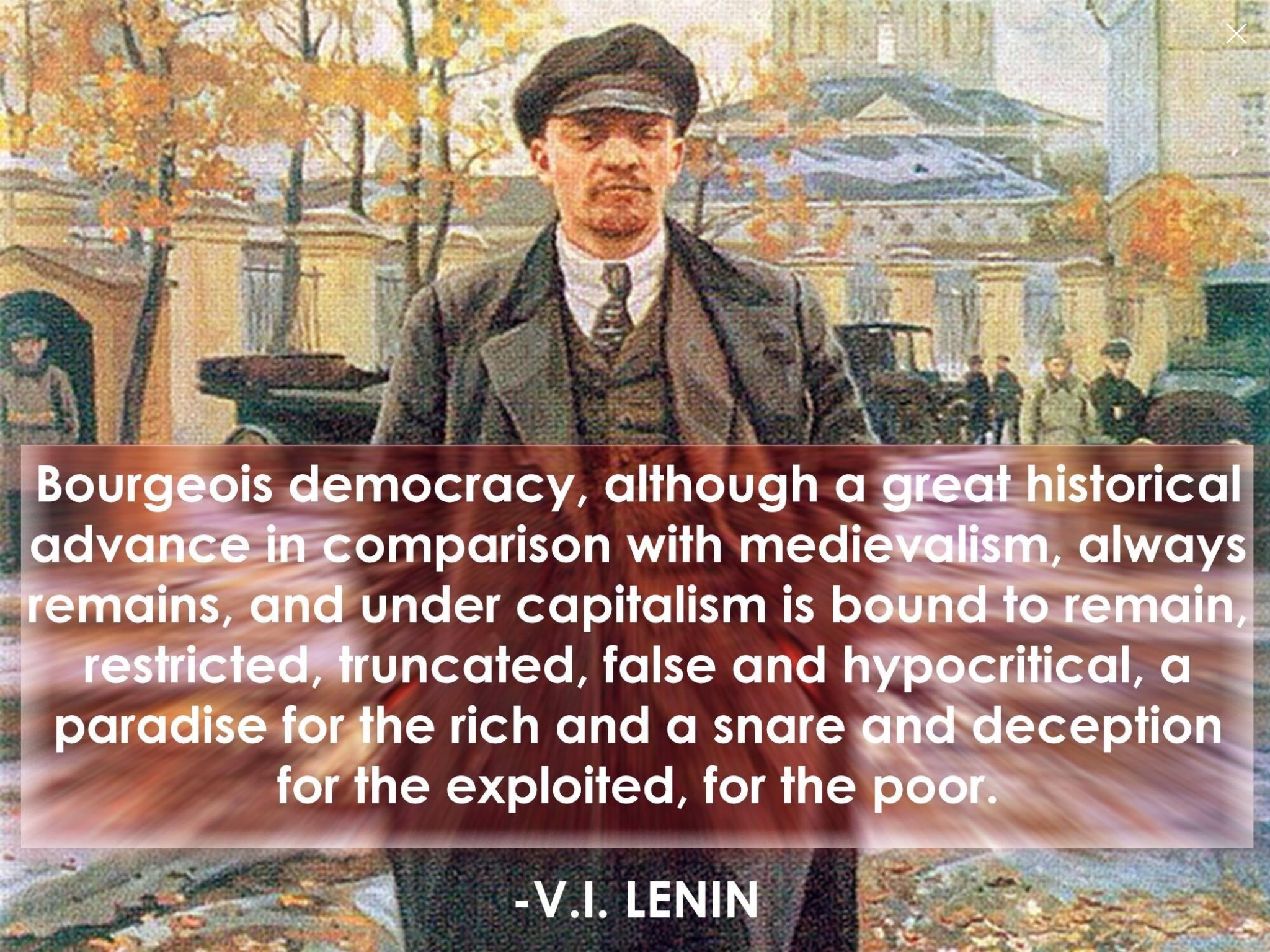
After the deaths of Karl Marx and Friedrich Engels, Marxist thought began to be revised by philosophers. These philosophers believed that certain principles of Marxism were false or disproven and should be replaced with others. This is known as revisionism of Marxism.
The modification and revision of Marxism was first done by German philosopher Edward Bernstein. Bernstein rejected important Marxist principles such as the labour theory of value, economic determinism, and the significance of class warfare. He also interpreted the progression of western civilisation as disproving some of Marx’s predictions of capitalism. Bernstein asserted that the middle class was not vanishing but rather growing, that there was not even more income and wealth inequality with capital in the hands of fewer and fewer people, and that the working classes were becoming better off and generally more affluent. Now, Edward Bernstein believed that revolution was simply unnecessary for socialism to be established as, in his mind, capitalism would naturally and gradually evolve into socialism. This form of Marxist revisionism is known as “Evolutionary Socialism”. Despite the fact that every economic system since the agricultural revolution has been brought about by violent social revolution and war, he saw the rise of universal suffrage and labour law as being the foundations for socialism. He thought that universal suffrage would allow for workmen to vote for the new emerging Labour Parties and Worker’s Parties so Anti-Capitalist politicians could pass and implement gradual parliamentary social reforms which would benefit the working class. Labour law, which was established by the workers who organised in trade unions to establish, protect, and guarantee their labour rights, was another stepping stone towards the end of capitalism as Bernstein believed that because labour law reduced the amount of hours a worker can work, raised wages, and improved working conditions, industrialists could no longer exploit workers as much. Bernstein also believed that colonialism was good as it spread capitalism to Africa and Asia. This belief is known as social imperialism. It holds that as capitalism was being spread, it would allow for socialism to be established more quickly.
After Bernstein’s death, Marxist revisionism had largely died out, only to return in the early 1950s following the death of Joseph Stalin and Nikita Khrushchev taking power. Khrushchev was profoundly Anti-Stalinist, focused on consumer goods much more heavy industry and nuclear weapons, was very liberal in terms of censorship of art and literature, and negated the need of socialist and Marxist revolution in the developing world. State capitalism began to emerge in 1955 and a year later, he gave his infamous “Secret Speech” denouncing Stalin. Communists and Marxist-Leninist intellectuals saw this as treachery to international working class movements and to the goal of world communism. Khrushchev’s policies lead to Mao Zedong orchestrating the Sino-Soviet Split in 1961.
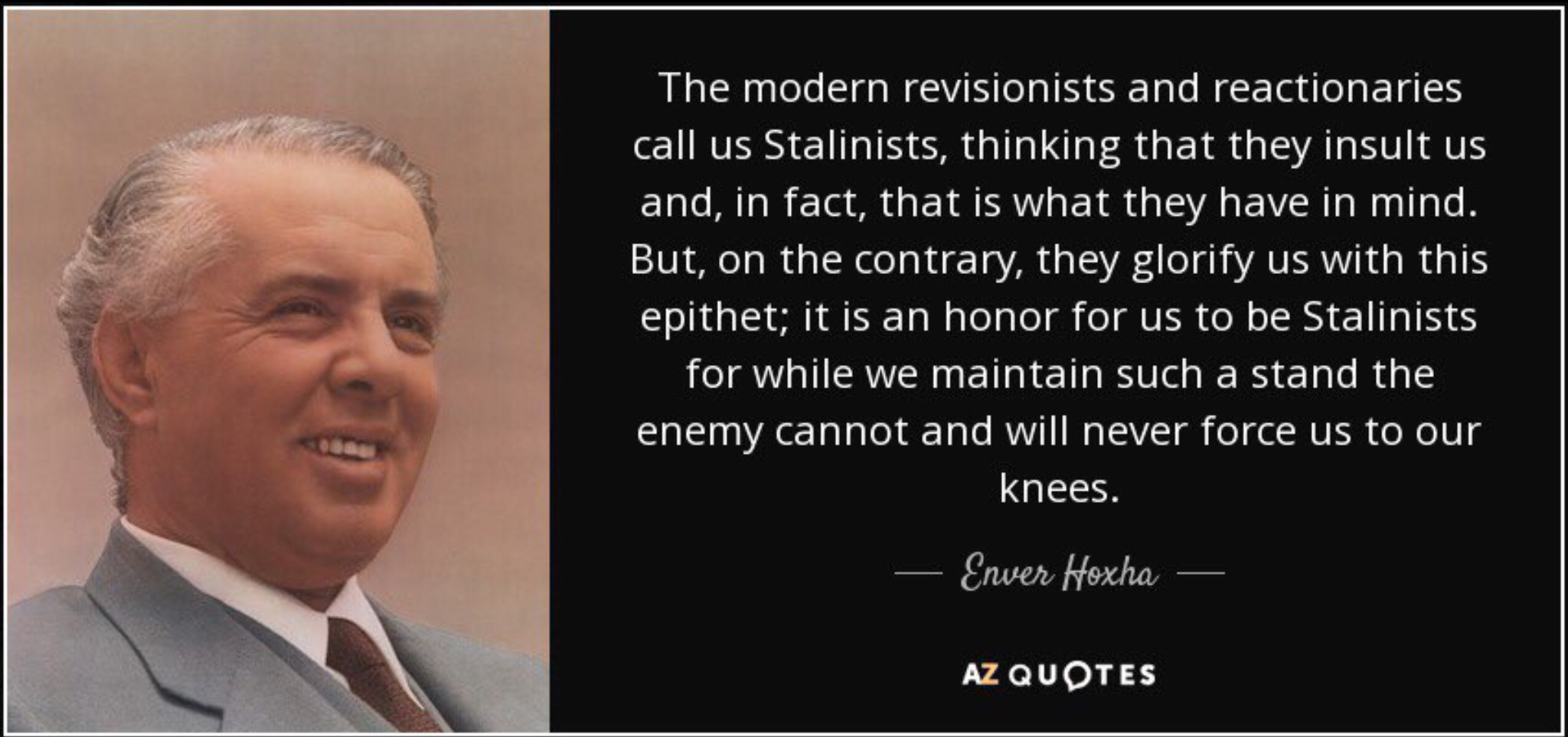
While Edward Bernstein’s Evolutionary Socialism and Khrushchev’s Anti-Stalinism are clear examples of revisionism, Soviet and Albanian writers described Maoist and Post-Maoist China and Tito’s Yugoslavia as being revisionist. While the Albanians stayed true to Marxism-Leninism and the Soviets took the path of economic privatisation and liberalisation, Tito and Mao were not revisionists. Tito was a market socialist who allowed for more freedom in art and literature as well as more worker’s self management, and Mao was a theoretician who made contributions to Marxism and massively helped his fellow countrymen.
Eurocommunism, also known as neocommunism, was a political system advocated by some communist parties in western European countries, stressing independence from the former Soviet Communist Party and preservation of many elements of Western liberal democracy. This revisionist trend was popular in the 1970s and 1980s. Its support for the parliamentary liberal democracy of Western Europe would have effectively destroyed the concept of the Dictatorship of the Proletariat.
The greatest example of Marxist revisionism is without a doubt Socialism with Chinese Characteristics, or Deng Xiaoping Theory. Upon the death of Mao, Deng took over as leader of China and had massive market reforms for economic privatisation and liberalisation. But Deng didn’t do this to destroy his country like the Soviets did. He did this to have more economic growth. The economy of modern China now reflects that of Lenin’s New Economic Policy and the polity is an authoritarian police state and bureaucracy. Of course, remnants of socialist democracy still exist in China as elections are held, but political freedom and individual liberty is limited.
 Socialism is Humanism!