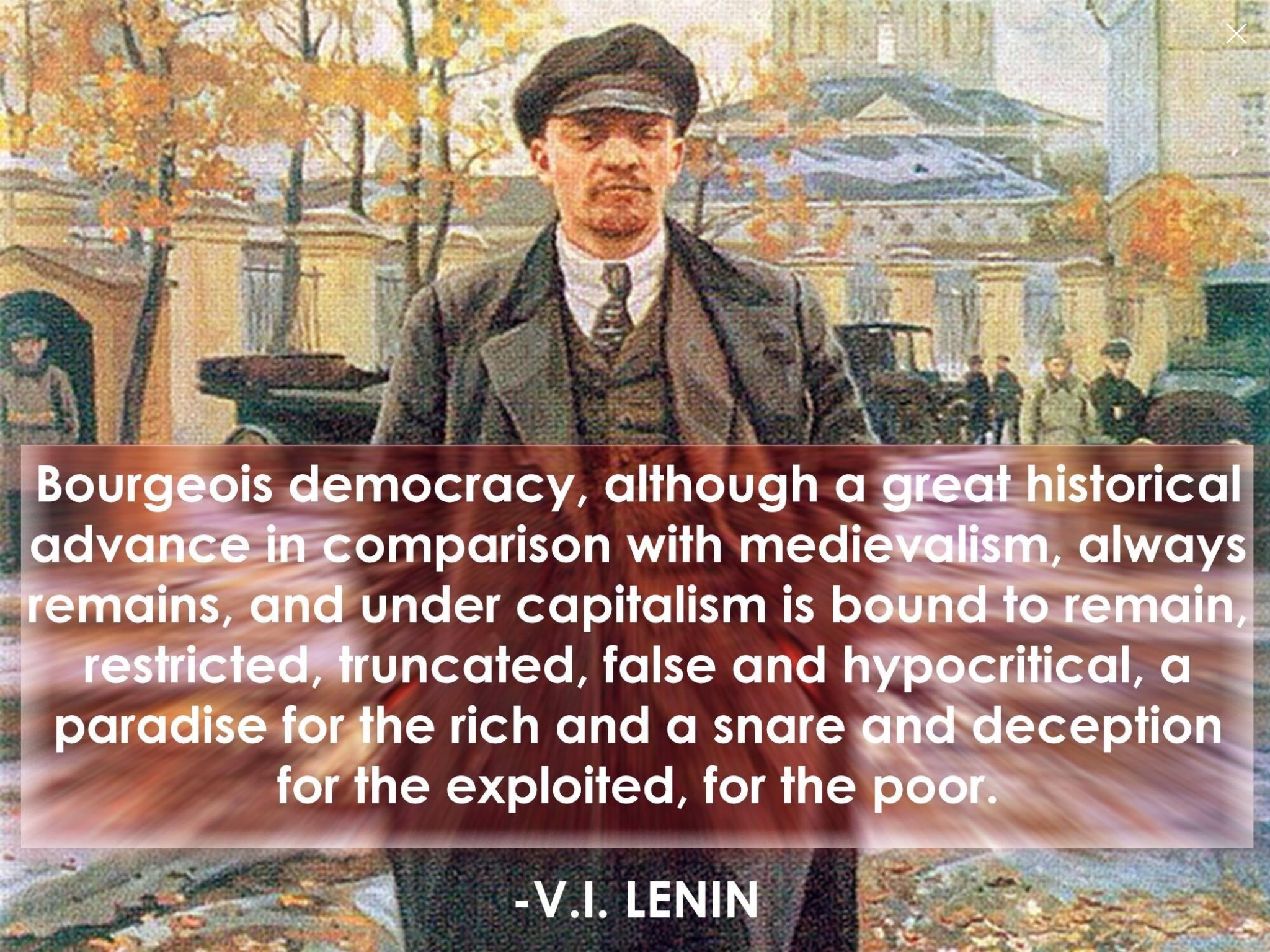
Within the proletarian Marxist movement and Marxism itself, two fundamental principles and beliefs of Marxism are extremely important to the philosophy. The methods of historical and dialectical materialism are used by Marxists to analyse history and human society through a scientific basis.
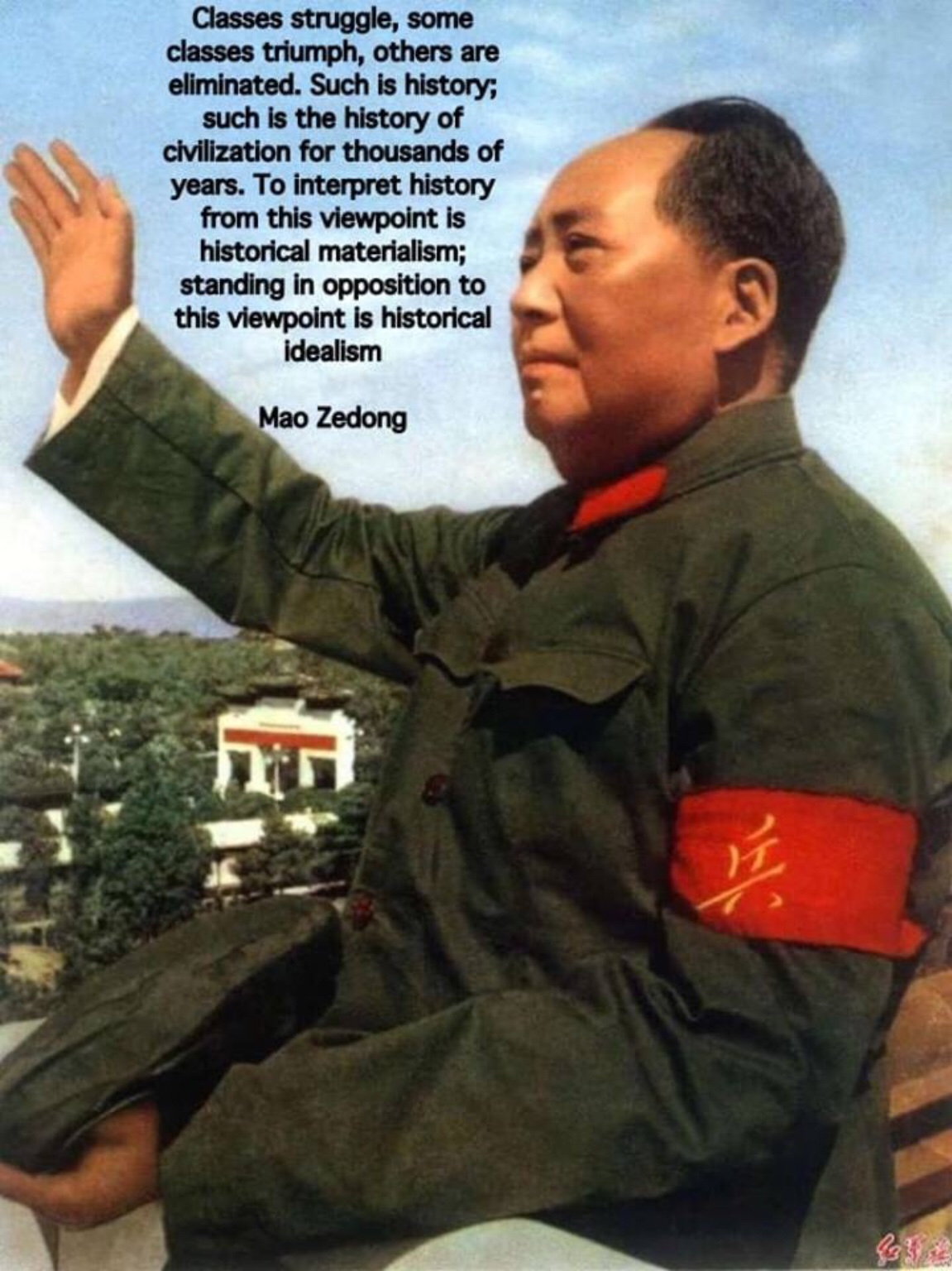
Historical materialism is the belief that the entire history of human society after the agricultural revolution has been a history of class struggle and conflict. The ultimate cause of all social changes, according to Marx, isn’t found to be the result of the human brain and mind, but in the changing of the mode of production. Marxists do not view history as a simple series of isolated objective facts, they seek to discover the general processes, principles, and laws that govern human nature and society.
Human society has historically gone through several stages of development. Before the agricultural revolution, humans lived under primitive communism. This was before the concept of private property existed. Primitive communism was pure tribal democracy and communalism where all able-bodied adults worked for the commonwealth of the entire commune and all goods were owned in common. Eventually the limited amount of resources lead to the discovery of agriculture. Out of the laziness and selfishness of people slavery was born. Individual communes had varying degrees of resources which created war to acquire such resources and the prisoners of war captured became the private property of others, forced labour and servitude.
After the economies of the Athenian and Roman empires collapsed and Germanic barbarians conquered Europe, feudalism was established. This economic and political system placed the king at the top, followed by the nobility, the clergy, lords and knights, peasants, and serfs. The king owned all land, in which he would grant some to the nobility and vassals (lords and knights) in exchange for military service to him. Villeins (peasants and serfs) would live and work on this land in order to survive and would provide the vassal with a portion of their harvest. Over time the merchant class which had been present for millennia started to grow. On the Italian coast there were maritime aristocratic republics dominated by the merchants. As time passed and the industrial revolution occurred, feudalism died out in most of Europe. The French Revolution was a bourgeois revolution inspired by classical liberalism and lead by the powerful mercantile class. This mercantile class evolved into the bourgeoisie of today.
Capitalism is now the mode of production used by the vast majority of the world. It is an economic system characterised by private ownership of the means of production by individuals. It is based on three pillars of wage labour, capital accumulation, and private property. Under capitalism workers sell their labour-power to the capitalist to operate the means of production. The value created by the workers is taken by the capitalist as profit, therefore leading to exploitation. Capitalism, like the slave economy and feudalism, cause cyclical economic recession due to their inherent structure. Because there is a finite amount of resources, land, and people on earth and capitalism requires ever growing expansion, the system will fall apart as every past system has. Workers will have no choice but to engage in class warfare or to risk starvation in order to establish socialism and the inevitable communism.
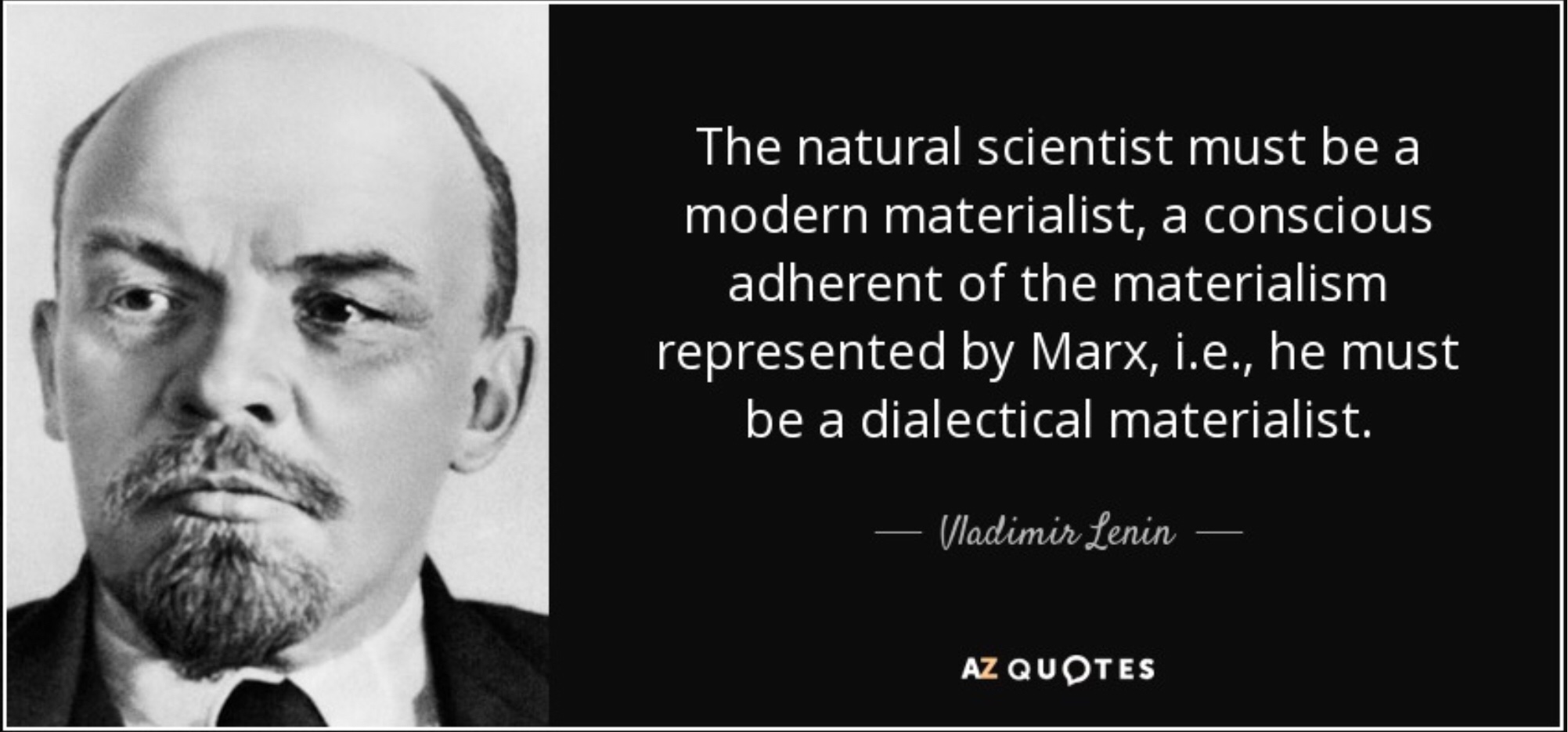
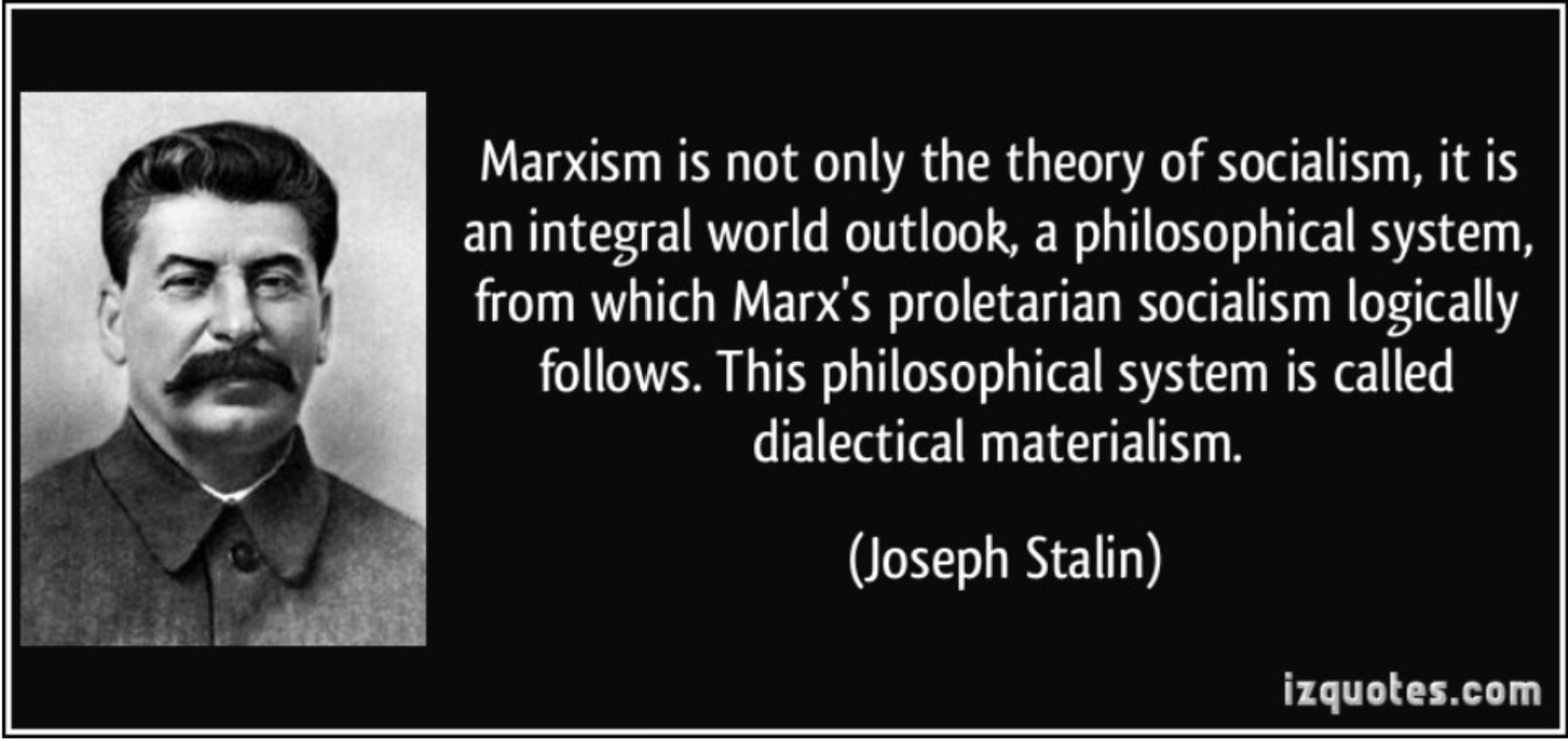
Dialectical materialism is the Marxist theory that political and historical events result from the conflict of social forces and are interpretable as a series of contradictions and their solutions, of which the conflict is caused by material need and conditions. For Marx and Engels, materialism meant that the material world, as perceived by our senses, is objectively real outside of the human mind. They didn’t refute the reality of mental processes but rather that ideas could arise only as products or reflections of material conditions. Dialectical materialism believes that class struggle and conflict is the ultimate driving force of human history.
The theory of knowledge of Marx and Engels started from the materialist premise that all knowledge is derived from the senses. But it is against the mechanist view that derives all knowledge exclusively from given sense impressions, they stressed the dialectical development of human knowledge, socially acquired in the course of human activity. Thus, individuals can gain their knowledge only through practical and logical interaction.
 Socialism is Humanism!